

AI-Gran 2
The manufacture of plastic products is closely related to the use of plastic pellets. There are numerous influencing factors in the production of these pellets that have a significant impact on their quality. The process begins with the melting of the filling material in an extruder, although this part of the process cannot be directly influenced.
The molten material is then directed from the extruder through a diverter valve towards a die plate and cutter. The cutting tool is a rotating knife head. The material is pressed through the perforated plate and the resulting strands of plastic are cut off under water by the cutting tool. The cutting tool is a rotating knife head. The cut off pellets go through a hose into a collection container. There is also a camera in the hose that takes pictures of the pellets.
The pellet quality is of great importance, which is why the machine parameters must be set precisely. In this project, the quality of the pellets is defined by the regularity of their shape. Any deviations in the pellets must be detected and corrected to ensure consistent quality. It should be noted here that the process temperatures, depending on the plastic material, must be kept within a specific range in order to avoid undesirable effects on the plastic properties.
The production of plastic pellets is a complex process that is influenced by the interaction of many factors. Choosing the right machine settings, monitoring temperatures and regularly checking pellet quality are crucial to producing high quality plastic pellets.
Overall, plastic pellets play an important role in the plastics industry. Optimizing pellet production and maintaining consistently high quality pose significant challenges. This requires a holistic approach to ensure the plastic pellets meet the high standards.
Goals
In order for the later products to achieve the desired quality, it is crucial that the plastic granules meet certain quality standards. The main goal is to ensure that these granules have an even and smooth shape. In order to meet this goal, existing camera software is used, which supplies the images of the granules. A suitable controller is to be developed that can effectively correct deviations in the granules.
By analyzing the readings provided by the camera software, one will be able to identify deviations in the size and shape of the granules, allowing the controller to make the necessary adjustments to the machine parameters to ensure quality.
In order to achieve the desired quality, the machine parameter settings depend heavily on the materials used. In order for the granulate to have a high quality, it is crucial that the setting values of the parameters are adjusted according to the material used. However, we are striving to design a controller concept that is ideally independent of the material. This would not only increase flexibility, but also minimize the effort for individual adjustments.
Approach
The measuring principle still has to be adapted so that the measured values are of sufficient quality. The current approach ensures that the range of fluctuation in the measured values is too high. The strategy for solving this problem is that the sections in which the images are taken are clocked in such a way that the variation in the measured values is small enough to make a statement. The proposed control concept consists of a model-free optimization process. This uses the parameters of the camera software and sets the contact pressure of the knives, the temperatures and the number of revolutions of the cutting tool.
Expected and Achieved Results
It is possible to measure the required machine parameters and also adjust them individually, provided the values to be set are within their setting range.
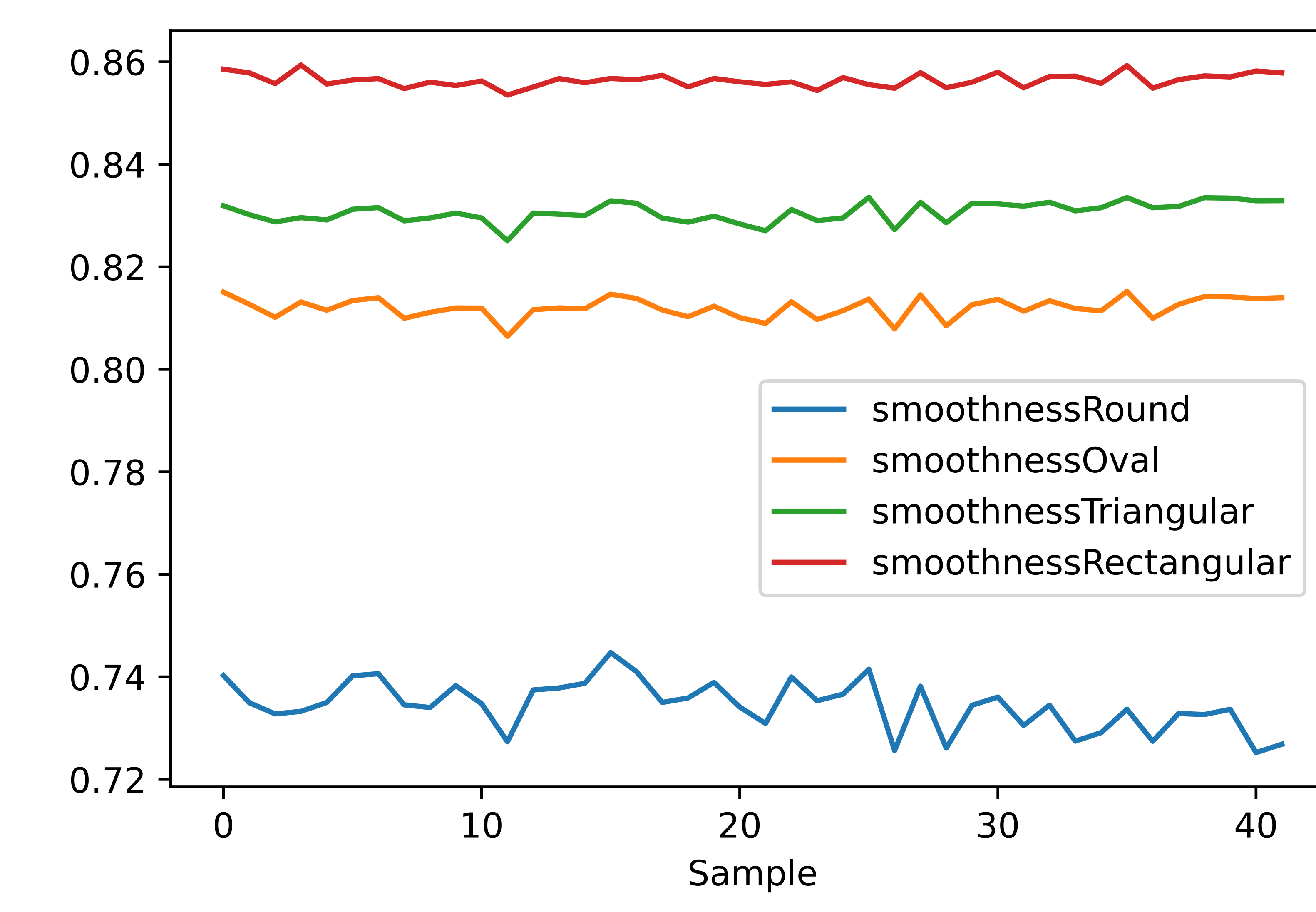
The quality of these measured values could also be checked. With the camera system, a new approach enables a remarkably smaller range of fluctuation of the required camera parameters compared to the old system. A more precise evaluation of the data is achieved through the rapid and continuous recording of images at short intervals. The camera system captures images in rapid succession until a predefined number is reached. Meanwhile, these images are evaluated in parallel to obtain the relevant information about the pellet quality. Then the procedure is repeated for the next scanning step.
In contrast, the previous approach was to capture a single image at each sampling step. Although this enabled a shorter sampling time compared to the current method. However, this method also had disadvantages, in particular a higher fluctuation range of the recorded data.
The consistent series of image recordings in connection with the simultaneous data analysis leads to a more targeted, more precise data acquisition. By reducing the range of fluctuation, the results become more reliable and reproducible. This has a significant impact on the efficiency of the overall operations and helps to significantly increase the quality of pellet production.