

CoSma
Predicting quality in production systems is an open field of research, especially for discontinuous production like assembly.
In manufacturing of safety critical systems the final products have to undergo rigorous testing. These testing schemes can cause a bottleck in the overall production line. In addition, if a broken product is detected at the end of the line, whilst the error has been caused in an early stage of production, many work steps are in vain, even have to be undone in case of repairs.
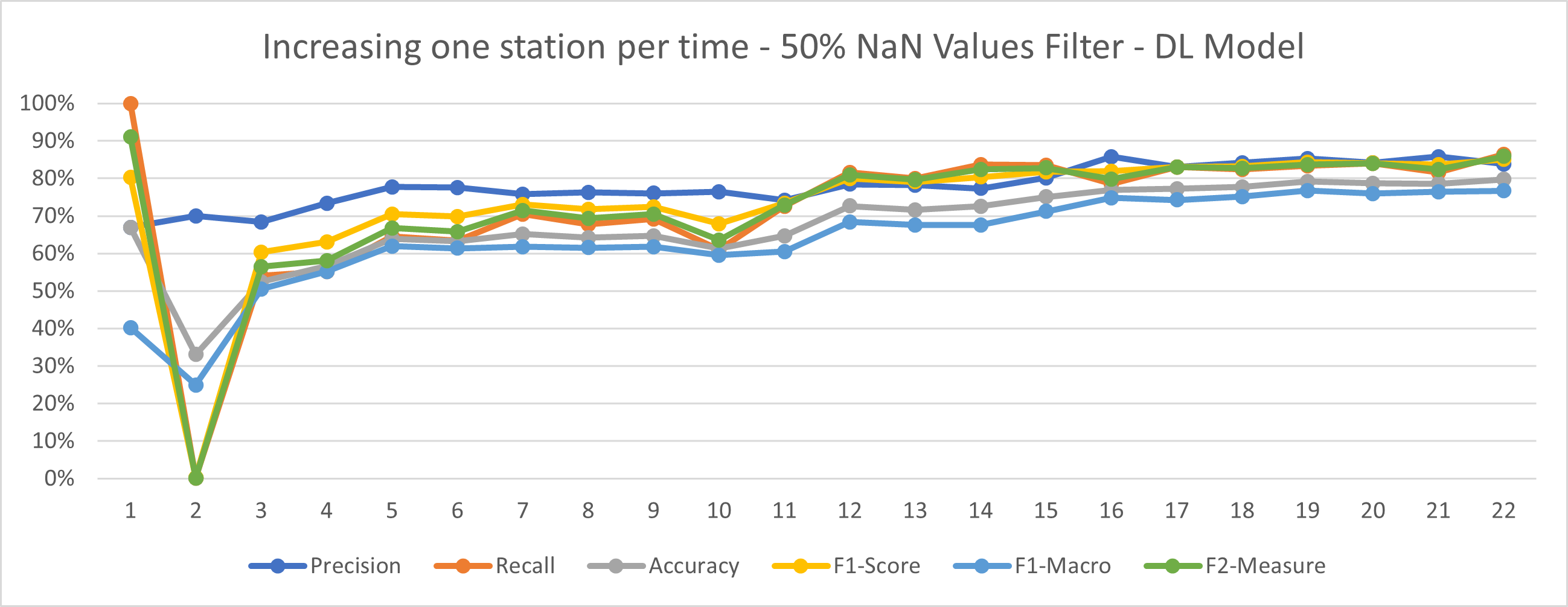
In many production lines, a great number of production parameters are recorded. This MFP investigates, which methods are beneficial to predict the outcome of such a final test. Second, we aim to determine, to which extent the prediction is reliable and whether it is possible to give a detailed estimate of which specific test in the whole testing scheme will fail. Finally, we apply an ablation study to determine an optimal station in the production line, that balances the prediction quality against the repair costs.
The problem was tackled by training several machine learning models. The developed approach was tested in an assembly line for electric inverters. Special focus was put on data preprocessing and feature selection. This posed a great challenge, as even after rigorous filtering during preprocessing, roughly ten thousand features remained for training of the model. Several methods were employed to narrow down the number of features.
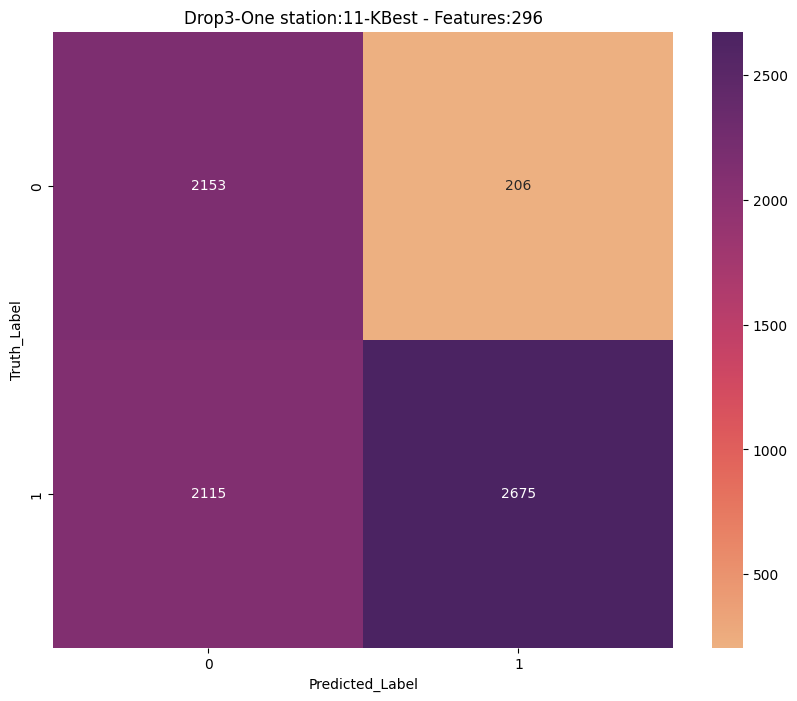
The trained models allow accurate predictions of failing products already after only half of the assembly steps have been performed. Further work will be done to improve the accuracy when predicting individual errors. The developed approach will be running in a virtual environment to evaluate its usefulness without interfering with the actual production.
Goals
The goal of this multi firm project is the creation of an environment, that allows to use real time data from the production line to predict the product quality. Target of prediction is the probability, that a product will fail in the end-of-line test. The quality of the predicition will be measured in comparison with the real results of the end of line tests.
The multi firm project will investigate in detail the structure and capabilities of the existing assembly line. Based on this initial analysis, requirements are developed for the system to create. After a first functional system architecture is agreed upon, models are built, trained on measurement data and integrated with the system architecture.
Verification and validation of the developed models will first be done backwards, thus by comparing model predictions based on recorded data with the corresponding test results, and later in-line: manufacturing data is mirrored into a live digital twin of the manufacturing line, allowing to investigate the prediction quality over an extended period of time.
Approach
Machine learning models and neural networks have been employed in a manifold of use cases. The focus of this project does not lie on the creation of new machine learning algorithms, but rather on their incorporation into an automated framework that continuously learns from new results in the manufacturing line and retrains its models on the fly.
Especially the selection of features can benefit from reliable automated tool support, as no specialist has the time, or is maybe not even capable of deciding for every variable whether it will be an important feature, or what its meaning is.
Expected and Achieved Results
The architecture to retrieve measurement data live from the production line has been implemented by partner Fronius and is already in use to prepare the datasets that serve to train the classifiers. Failure prediction models have been created and trained based on classical machine learning algorithms and neural networks. A stacked model of these prediction models will be integrated in the architecture. Verification and evaluation of the classifier will be carried out until the end of the project. The results from the evaluation will be used to estimate the potential for optimization through changing the order of test cases.
Future work will include the feedback of assembly actions and components that might cause failing products in-line. This requires yet more rigorous data collection in the production of preproducts and clear tracking of those until the assembly station. Another activity for future investigation is the implementation of a variable testing scheme, whose order reacts on the estimated frequency of errors occurring.
Project Details



Contact

- +43 732 2468 - 9465
- Altenberger Straße 69, 4040 Linz, Austria